Hacker journalism: Version control for campaign promises

The always outstanding Threat Level sez:

John McCain’s campaign published a side-by-side comparison of Barack Obama’s Iraq War policy web pages on Tuesday using a new automated online tracking service called Versionista.

Obama statements compared at Versionista

The Friday, July 11 version of the page says: “at great cost our troops have helped reduce violence in some areas of Iraq, but even those reductions do not get us below the unsustainable levels of violence of mid-2006.”

The Monday, July 14 version spidered by Versionista says: “Our troops have heroically helped reduce civilian casualties in Iraq to early 2006 levels. This is a testament to our military’s hard work, improved counterinsurgency tactics, and enormous sacrifice by our troops and military families.”

We (software dorks) have been doing this for years.  It’s how we tell who broke something:
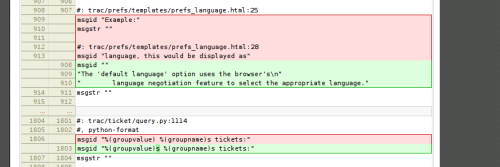
Trac project, Changeset 7273 for trunk
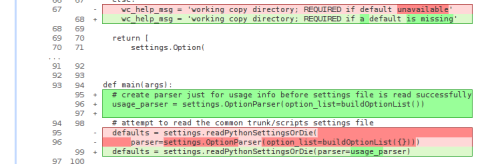

Revision: 380, SoC
Revision: 380, SoC

Version control is an enormously powerful tool. If you’re making software without it, you’re nuts. (It’s also the primary reason I don’t use word processors to write – there’s no good way get a diff between two copies of a Word doc. Well, that… and Word sucks.)

I just wish a journalist had done this, instead of a campaign worker.

Ugh. Next time.

New media literacy: a quiz

Ryan Thornburg has posted a quiz for his readers — an excerpt:

Could you explain how Twitter.com spread like wildfire the rumor of the death of Subway spokesman Jared Fogel? (And why it will be important for every political journalist to monitor the site on Nov. 3?)

Could you use Wikipedia’s revision history to see who edited the Jared Fogel entry with the false rumor of his death? Could you explain why the page is (probably) accurate right now?

SEO and whois are also on the quiz – do you know how these tools work, or even what they are?  His point is that the bad people do know.  They’re creating misinformation — the modern journalist needs to know how to filter it out.

I would add:

UPDATE – Spelled Ryan’s name wrong! Eek!!  So sorry.  Medill F.

Grading news applications on the iPhone

Mindy McAdams graded news apps on the iPhone 3G:

Bloomberg LP doesn’t have any pictures or video, but whew! It loads fast and navigates fast. It updated a few times in the 24-hour span from Saturday to Sunday night; I’m betting that will only increase Monday. Note that you can input your own stocks, including the number of shares you own, for price updates. Grade: A

Bloomberg on the iPhone 3G

They sold 1 million 3G iPhones over the weekend. Looks like it’s time to set up one of those iPhone plugins for WordPress. Gots to make this place look pretty on the new shiny!

Can old media get agile?

Signal vs. Noise sez:

We stalled launching our Job Board for a while because we felt we had bigger fish to fry. Once we got around to it, we couldn’t believe we had waited so long. It was easy to set up, a great resource for our community, and has generated lots of cash for the company.

There’s more than one way to skin the revenue cat.

They go on to suggest that this is a virtue of being a small, agile company.

This is something new and webby. In the before times, diversification took gobs of capital, either for R&D or aquisitions. Now you can just code up a job board, and bang! Your software company is a recruiting company.

Form, by carlosluis
Form, by carlosluis

Are old media too big to use the web like this? Maybe not.

The New York Times is getting into the game (quoting Matter/Anti-Matter):

In essence, this means the Times is turning into a software company, applying the same business model philosophy “as many start-ups in Silicon Valley:” “Build neat tools, get traction, and then figure out how to make money off them later,” as the Silicon Alley Insider describes it.

Whaddya think?

The SVN post also gives props to Apple – not a small company, but one with killer leadership. Do media execs even *want* to be agile? Or have they got too much mass?

Tell your story with data, without writing a line of code

I’ve been on the hunt for quick and dirty ways to show off data: visualization tools that are free, pretty, and easy to embed in a story.  Here are my finds so far.

Kick-ass embeddable visualizations

Upload your data set to ManyEyes, and you can turn it into all kinds of neat charts and wacky interactive stuff like word trees. They make it really easy to share. Click on the “share this” link below any visualization to get a snippet of HTML to paste into a story.

Amy Gahran loves word trees too:

You specify a word or phrase, and ManyEyes shows you all the different contexts in which that string appears in a tree-like branching structure. This helps reveal recurring themes in the document, and shows how topics and subtopics are related.

The other hot ManyEyes demo is the government expenses visualization. Use the menu on the left to drill down into spending categories. (Can you find the S&L bailout?)

There are so many kick-ass things you can make with ManyEyes: tree maps, tag clouds, and bubble charts, to name just a few. Here’s a map!

Timelines get sexy

It’s easy to make sweet, interactive timelines with circaVie. Like, really easy. Sign up, click “start a timeline” and add events. Like ManyEyes, they also make it simple to embed a widget, just paste in the provided snippet.

http://www.circavie.com/flash/timeline.swf
Text message scandal timeline by DFP Graphics

Words are pretty

Wordle makes pretty text visualizations by shuffling words from a file, web page, etc., and sizing the words based on how frequently they occur. Much simpler than a word tree, but sometimes simple is just what you need.

Sixth W on Wordle

Need a map, fast?

Google’s Charts API is suuuper cool.  It can make you bar charts, maps, venn diagrams, even sparklines.  But it’s a tool for web developers, so it’s a bit chewy to use if you’re not familiar with a few things.

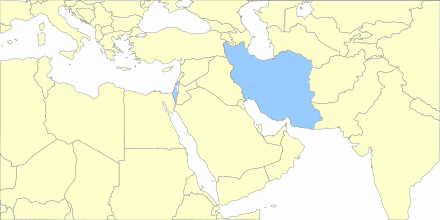
Lucky for us, lots of folks have built tools to make it easier. The Google Chart Creator is one of the better ones.  I made this map in under a minute.

Google chart map of the Middle East

What else?

It feels like I give the NYT props every day for their data viz skillz. Their stuff is pretty and awesome, but they’ve got a team of developers, designers and whiz-bang specialists.

What other tools are out there that make it simple to create embeddable news visuals, sans a staff of flash savants?